Fuzzy AI: A Platform for Warming Prospects Before Outreach
Cold outreach is a familiar part of sales, partnerships, recruiting, consulting, and many other professional workflows. The challenge is also familiar: people are busy, inboxes are crowded, and a message from someone completely unknown is easy to ignore.
Fuzzy AI is a platform focused on changing what happens before the outreach message is sent. Instead of starting with a cold email or LinkedIn message, it helps teams identify people who are already active in a relevant market, stay visible through content and thoughtful engagement, and then launch personalized outreach once there is some level of familiarity.
The platform can be explored at https://getfuzzy.ai.
What Is Fuzzy AI?
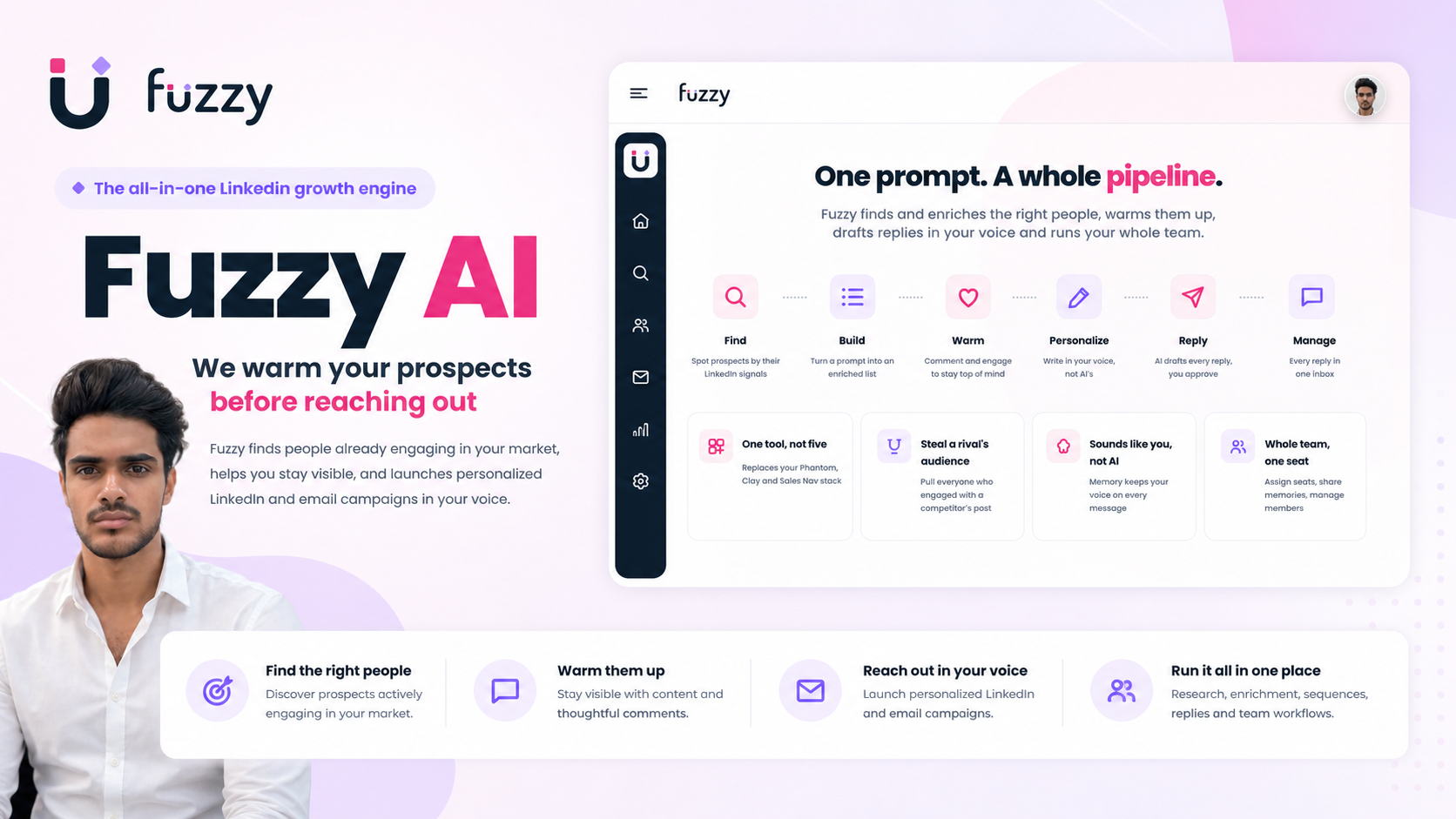
Fuzzy AI is a prospecting and outreach platform designed to help users warm up potential prospects before contacting them directly. Its tagline, “We warm your prospects before reaching out,” captures the core approach.
Rather than treating outreach as a standalone action, Fuzzy combines several steps that often happen across different tools:
- Finding people already engaging in a market or topic area
- Helping users stay visible through content and comments
- Launching personalized LinkedIn and email campaigns
- Managing research, enrichment, sequences, replies, and workflows in one place
The platform is aimed at people and teams who rely on outbound communication but want that communication to feel more relevant and less disconnected from the prospect’s existing interests or activity.
The Problem It Tries to Address
Cold outreach is often ignored because the recipient does not recognize the sender. Even when a message is relevant, it can feel abrupt if there has been no previous interaction, context, or visibility.
Many outreach workflows begin with a list of contacts, followed by a sequence of messages. While that process can be organized, it does not always account for the relationship gap between sender and recipient. Fuzzy AI is built around the idea that warming a prospect before direct outreach can make the first message feel less unfamiliar.
This warming process may include identifying relevant conversations, engaging with prospects’ content, or staying visible in spaces where prospects are already active. The goal is not simply to send more messages, but to create more context before those messages are sent.
How Fuzzy AI Works at a High Level
Fuzzy AI brings together several parts of the outbound workflow. While the exact setup may depend on how a user or team chooses to use the platform, the overall flow can be understood in a few stages.
1. Finding Relevant People
The first step is identifying people who are already engaging in a specific market. This is different from only building a static list based on job title, company size, or industry. The emphasis is on people who are showing activity around a relevant topic or space.
For example, a team may want to find prospects who are interacting with content in their field, participating in conversations, or showing interest in subjects connected to the team’s product or service. This helps the outreach process begin with better context.
2. Staying Visible Before Outreach
Fuzzy AI also supports visibility through content and thoughtful comments. This matters because professional relationships often begin before a formal message is sent. A prospect may notice a comment, a post, or a recurring presence in relevant discussions.
This part of the workflow is about creating familiarity. Instead of appearing suddenly in someone’s inbox, the sender may already have been visible in a professional context related to the prospect’s interests.
3. Launching Personalized Campaigns
Once prospects have been identified and warmed, Fuzzy AI helps users launch personalized LinkedIn and email campaigns. The platform is designed to support messaging in the user’s own voice, rather than producing generic outreach that feels disconnected from the sender.
Personalization is a key part of modern outreach because a message that reflects context is easier to understand. If someone is being contacted because of a relevant topic, interaction, or market activity, the message can reflect that reason more clearly.
4. Managing Replies and Workflows
Outreach does not end when a message is sent. Replies need to be tracked, follow-ups need to be organized, and team members may need visibility into what is happening. Fuzzy AI includes replies and team workflows as part of the same environment.
This can reduce the need to switch between separate tools for prospect research, enrichment, message sequencing, inbox monitoring, and collaboration. Having these pieces together may make the process easier to manage, especially when multiple people are involved.
Key Features Mentioned by the Platform
Fuzzy AI describes itself as covering several parts of the prospecting and outreach process. The main areas include:
- Market-based prospect discovery: Finding people already engaging in a relevant market.
- Content and comment visibility: Helping users stay visible before direct outreach begins.
- LinkedIn and email campaigns: Creating personalized outreach across professional channels.
- Research and enrichment: Supporting the process of understanding and preparing prospect information.
- Sequences: Organizing outreach steps instead of handling each message manually.
- Reply management: Keeping responses connected to the outreach workflow.
- Team workflows: Supporting collaboration when outreach is handled by more than one person.
Why the “Warm Before Outreach” Approach Matters
The main idea behind Fuzzy AI is that outreach can benefit from context. A prospect who has already seen a person’s name, comment, or content may experience a message differently from one sent by a complete stranger.
This approach also reflects how many professional relationships naturally develop. People often become aware of others through repeated exposure, shared topics, or meaningful interactions before any direct conversation begins.
In a business setting, this can matter for several reasons:
- It creates a more natural starting point for conversation.
- It helps the sender understand what the prospect is already engaging with.
- It can make outreach feel more relevant to the recipient’s current interests.
- It encourages interaction before asking for attention in an inbox.
Fuzzy AI is built around this sequence: understand the market, become visible, then reach out with context.
Who Might Use Fuzzy AI?
Fuzzy AI appears relevant for people and teams that depend on outbound communication and relationship-building. This may include sales teams, founders, consultants, agencies, business development professionals, and others who need to connect with prospects in a structured way.
It may also be useful for teams that are already using multiple tools for prospect research, enrichment, LinkedIn activity, email sequencing, and reply tracking. Since Fuzzy AI brings these areas together, it is positioned as a more unified workspace for outbound workflows.
The platform’s description also mentions that customers call it intuitive, seamless, and more comprehensive than tools they used before. This suggests that ease of use and consolidation are part of the platform’s appeal.
How It Fits Into a Modern Outreach Workflow
A traditional outbound workflow often looks like this:
- Build a prospect list
- Find contact details
- Write a message
- Send a sequence
- Track replies
Fuzzy AI adds an earlier stage to this process. Before sending the message, it focuses on identifying prospects who are already active in the relevant market and creating visibility through engagement.
A Fuzzy-style workflow may look more like this:
- Identify people engaging in a relevant market
- Understand their activity and context
- Become visible through content or thoughtful comments
- Launch personalized LinkedIn and email outreach
- Manage sequences, replies, and team activity from one place
This does not remove the need for good messaging, clear positioning, or respectful communication. It simply changes the starting point so outreach is not the first moment of contact.
Things to Keep in Mind
Any outreach platform should be used carefully. Personalization, relevance, and respect for the recipient’s time remain important. Warming a prospect should not mean over-engaging or creating artificial interactions. The most useful version of this approach is based on genuine relevance and thoughtful communication.
It is also important to consider channel rules and professional norms when using LinkedIn and email for outreach. A platform can organize and support the process, but the quality of the interaction still depends on how it is used.
Final Thoughts
Fuzzy AI is built for a specific shift in outbound communication: moving from purely cold outreach toward a warmer, more context-aware process. By combining market engagement, visibility, personalized LinkedIn and email campaigns, research, enrichment, replies, and team workflows, it aims to make prospecting feel more connected from the beginning.
For people who want to understand how outreach tools are evolving, Fuzzy AI is an example of a platform that treats the pre-outreach stage as an important part of the overall workflow.
You can visit the platform here: https://getfuzzy.ai.