OpenSEO: A Closer Look at an Open Source SEO Platform for Research, Audits, and AI Workflows
Search engine optimization often starts with a simple question: what should a website focus on next? For a small business, independent creator, consultant, or growing team, the answer usually depends on data. Keyword opportunities, competitor activity, backlink signals, and technical site issues can all shape what content gets created and what work gets prioritized.
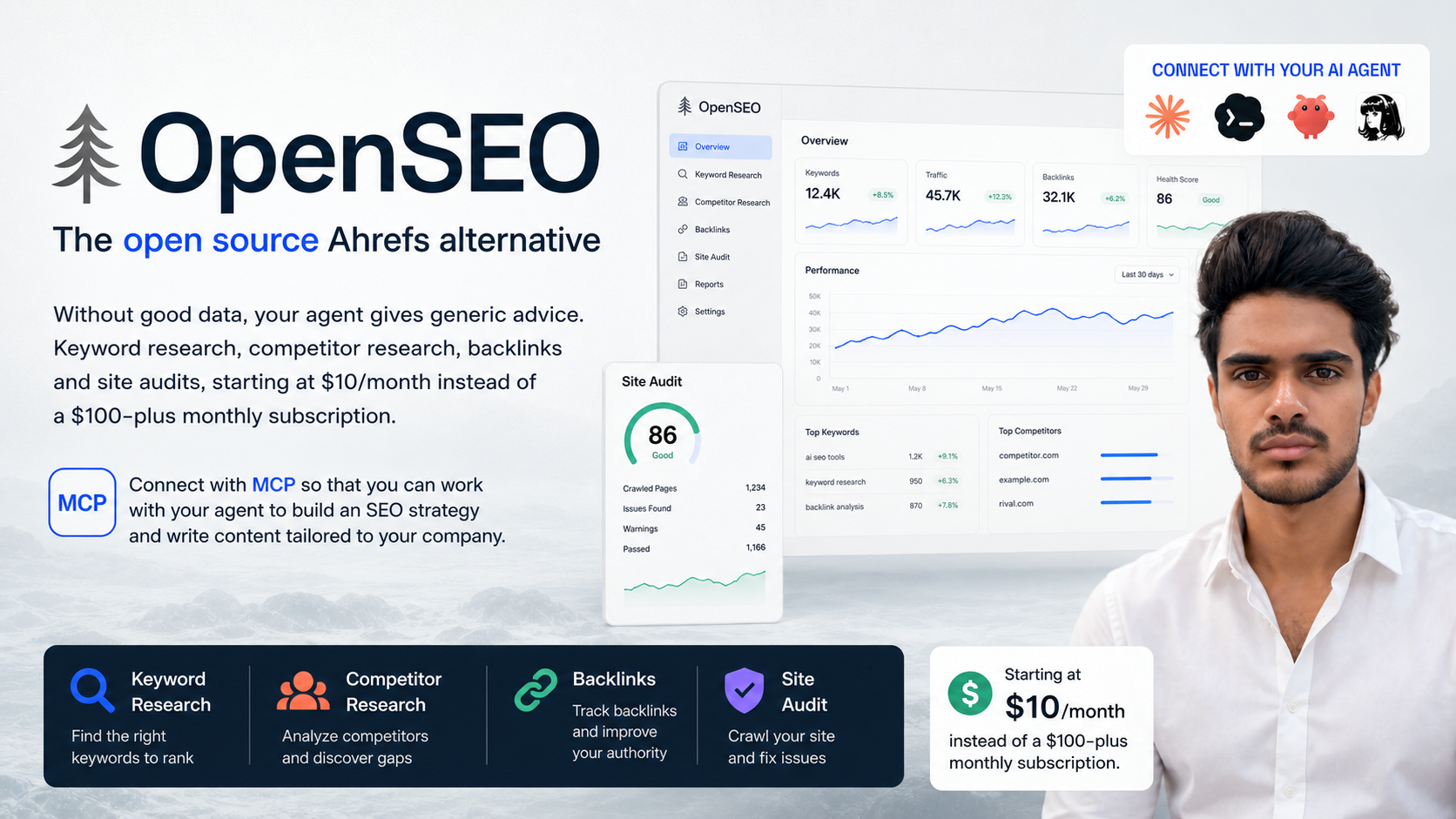
OpenSEO is a platform built around that need. It describes itself as the open source Ahrefs alternative, offering SEO data and workflows for keyword research, competitor research, backlinks, and site audits. It also includes MCP connectivity, which is intended to help users work with an agent to build SEO strategy and write content that is more closely tailored to a company.
The website is available at https://openseo.so/.
What Is OpenSEO?
OpenSEO is an SEO platform focused on making core SEO research more accessible. Its main idea is straightforward: many SEO decisions become more useful when they are based on real data rather than general advice.
In practice, SEO tools are often used to answer questions such as:
- Which keywords are people searching for?
- What topics are competitors ranking for?
- Which pages on a website have technical or structural issues?
- What backlinks point to a site or competitor site?
- What content should be created, updated, or improved?
OpenSEO brings these areas together under one platform. It is positioned as an alternative to more expensive SEO subscriptions, with pricing described as starting at $10 per month instead of a $100-plus monthly subscription.
Why SEO Data Matters
SEO advice can become vague when it is not connected to actual data. Suggestions like “write better content,” “target long-tail keywords,” or “build authority” may be true in a broad sense, but they do not always tell someone what to do next.
For example, a business may need to know which search terms are realistic to target, which competitors already appear in search results, and whether the current website has issues that prevent pages from performing well. Without that context, an SEO plan can easily become a list of generic tasks.
OpenSEO’s description directly addresses this point: without good data, an agent gives generic advice. This is especially relevant as more people begin using AI tools and agents for content planning, research, and marketing workflows. The usefulness of those systems often depends on the quality and relevance of the data they can access.
Core Areas Covered by OpenSEO
OpenSEO focuses on several common SEO functions. These are not unusual categories in SEO, but they are important because they support different parts of a search strategy.
Keyword Research
Keyword research helps identify what people are searching for and how those searches may connect to a website’s products, services, or content. It can be used to find new article topics, improve existing pages, or understand how people describe a problem before they are ready to buy or take action.
For individuals and teams using SEO as part of content planning, keyword research is often the first step. It gives structure to the content calendar and helps avoid writing only from assumptions.
Competitor Research
Competitor research looks at what other websites in the same space are doing in search. This can include the keywords they appear for, the type of content they publish, and the areas where they may have built visibility.
This kind of research is useful because search results are competitive by nature. A page does not rank in isolation; it is compared against other pages trying to answer the same or similar search intent. Seeing what competitors are targeting can help a website understand where there may be gaps or opportunities.
Backlink Data
Backlinks remain one of the signals commonly reviewed in SEO analysis. They can help show which websites are linking to a domain or page, and they can provide context around authority, visibility, and relationships across the web.
Backlink research can be useful for understanding why certain pages perform well, identifying mentions, or comparing a site with competitors. It can also help teams see whether their content is earning links over time.
Site Audits
Site audits focus on the health and structure of a website. A site may have good content but still struggle if there are technical issues, broken pages, missing metadata, crawl problems, or other obstacles that affect search visibility.
Audits are especially useful because they turn a broad website review into a more organized list of items to inspect. For site owners who are not full-time SEO specialists, this can make the maintenance side of SEO easier to understand.
How MCP Fits Into the Platform
One of the notable parts of OpenSEO’s description is its MCP connection. The platform is designed so users can connect it with MCP and work with an agent on SEO strategy and content writing.
This matters because AI agents are often most helpful when they can work with specific information rather than general knowledge. If an agent has access to SEO data, it can support more focused tasks, such as:
- Building a content strategy around actual keyword opportunities
- Comparing a website with competitors before suggesting topics
- Drafting content that aligns with a company’s existing positioning
- Prioritizing site improvements based on audit findings
- Using backlink and competitor context during planning
The value of this type of workflow is not just automation. It is the connection between data and execution. Instead of treating SEO research and content creation as separate steps, OpenSEO’s MCP approach is intended to bring them closer together.
Who Might Find OpenSEO Relevant?
OpenSEO may be relevant to several types of users, especially those who need SEO data but are also mindful of subscription costs.
- Small business owners who want to understand search opportunities without building a large marketing stack.
- Content creators who need keyword and competitor research to plan articles, guides, and landing pages.
- Freelancers and consultants who work on SEO strategy, audits, or content planning for clients.
- Startup teams that need practical SEO research while keeping software costs controlled.
- AI workflow users who want their agents to work from SEO data rather than broad suggestions.
The platform’s open source positioning may also matter to people who prefer tools with a more transparent development model. For some teams, open source software can be appealing because it gives them more visibility into how a tool is built and how it may evolve.
Cost Context
SEO platforms can be expensive, especially for users who only need a few core functions or are still testing whether SEO will become a major channel for their work. OpenSEO’s pricing is described as starting at $10 per month, which places it in a lower-cost category compared with many established SEO suites that can cost $100 or more per month.
Price alone does not determine whether a platform fits a particular workflow. The more important question is whether it provides the data and functions a user actually needs. For someone mainly looking at keyword research, competitor research, backlinks, audits, and agent-connected workflows, OpenSEO is built around those categories.
A Practical Way to Think About OpenSEO
OpenSEO can be understood as a platform for connecting SEO research with action. Its focus areas cover the usual foundation of SEO work: finding search opportunities, understanding competitors, reviewing backlinks, and identifying website issues.
The MCP connection adds another layer by making the data usable in agent-based workflows. That is an important distinction because many people now use AI tools to plan content, draft pages, or organize marketing tasks. When those tools are connected to relevant SEO data, the output can be more specific to the website and market being worked on.
OpenSEO does not need to be viewed only as a replacement for a larger SEO platform. It can also be viewed as a simpler entry point into SEO research for people who want data-backed planning without starting with a high monthly software cost.
Final Notes
OpenSEO is an open source SEO platform that brings together keyword research, competitor research, backlinks, site audits, and MCP-connected agent workflows. It is positioned for users who want practical SEO data at a lower starting price than many traditional SEO tools.
For anyone exploring SEO tools, the main things to evaluate are the type of data needed, how often the tool will be used, and whether AI-agent integration is part of the workflow. OpenSEO’s focus is clearly centered on those areas, especially for users who want to move from generic SEO suggestions toward research-backed planning.
Website: https://openseo.so/