Fedica 2.0: A Closer Look at Social Publishing and Audience Intelligence for Creators
Managing a social presence is no longer as simple as posting on one platform and waiting for people to respond. Many creators, professionals, and small teams now have audiences spread across several social apps. Some people follow on one platform, others comment somewhere else, and another group may only engage occasionally. This can make it difficult to understand who is actually paying attention and what kind of content matters to them.
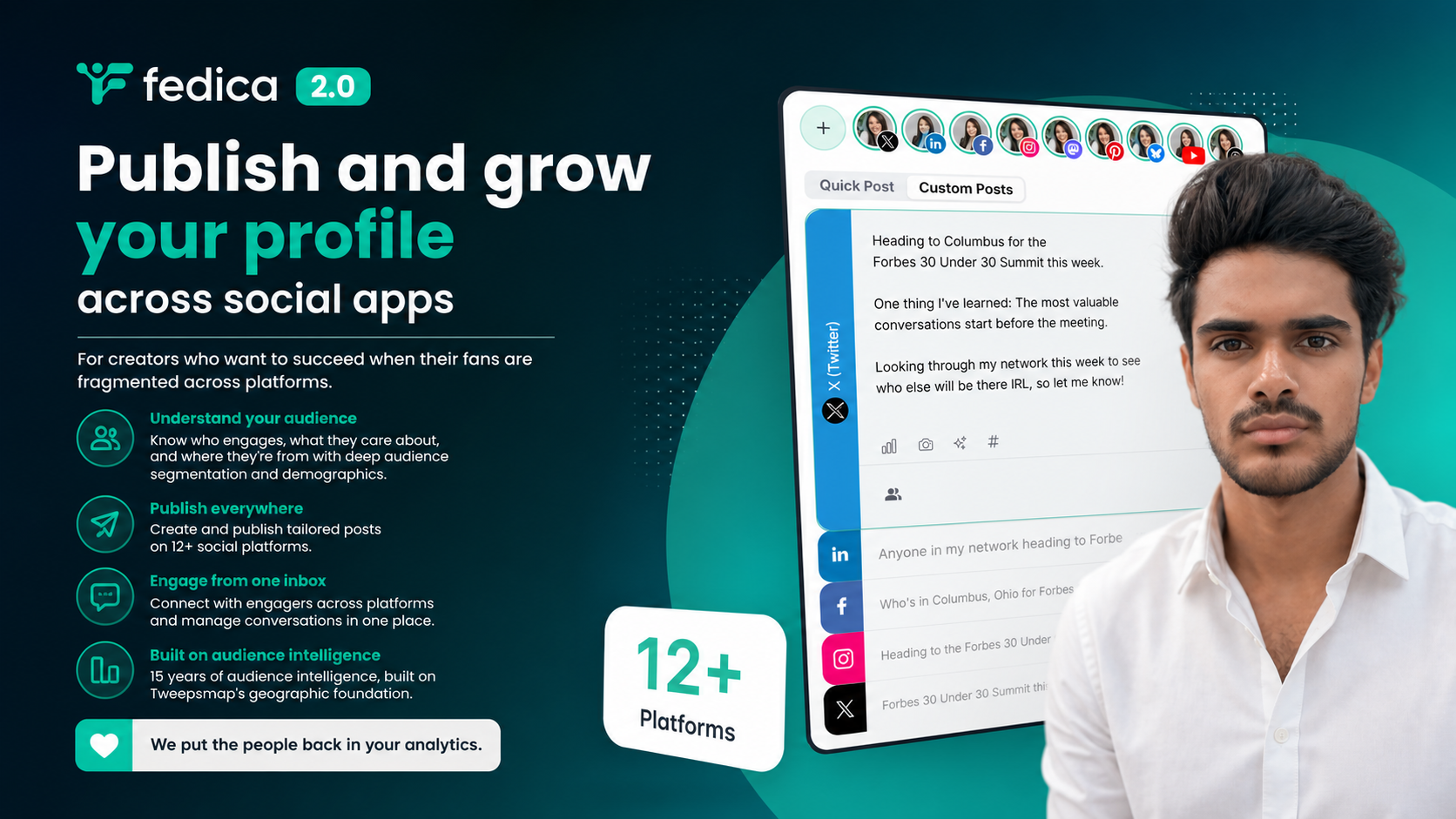
Fedica 2.0 is a platform built around this problem. It combines social publishing, audience analytics, segmentation, demographics, and engagement management in one place. The platform is designed for creators and professionals who want a clearer view of their audience across different social apps, rather than looking at each platform in isolation.
You can visit the platform here: https://fedica.com
What Is Fedica 2.0?
Fedica 2.0 is a social media publishing and audience intelligence platform. Its main purpose is to help users publish content across multiple social platforms while also understanding the people who engage with that content.
The platform builds on the history of Tweepsmap, which was known for audience intelligence and geographic audience insights. Fedica 2.0 continues that direction by focusing not only on numbers, but also on the people behind the engagement. Instead of treating analytics as a collection of charts, the platform is positioned around helping users understand who their audience is, where they are from, and what they care about.
This can be useful for creators, solo professionals, community builders, marketers, and anyone who wants to manage a cross-platform presence with more context.
The Challenge Fedica Is Built Around
For many creators, audience fragmentation is now a normal part of online work. A person may follow someone on one platform, comment on another, and subscribe or interact somewhere else. This creates several practical challenges:
- It becomes harder to know which audience segments are most engaged.
- Different platforms may show different metrics, making comparison difficult.
- Creators may need to adapt posts for each social app.
- Conversations can be scattered across multiple inboxes or comment sections.
- Demographic and geographic information may be limited or disconnected.
Fedica 2.0 brings these areas closer together. The platform is not just about scheduling posts. It also focuses on understanding audiences in more detail, so users can see patterns in engagement, location, interests, and community behavior.
Publishing Across 12+ Platforms
One of the central features of Fedica 2.0 is the ability to publish tailored posts across more than 12 platforms. This is important because content rarely works the same way everywhere. A post that fits one social app may need a different format, tone, or length on another.
Fedica allows users to prepare and adapt posts for multiple platforms from one workflow. This can reduce the need to jump between apps just to create variations of the same message.
For creators and teams, this type of publishing setup can help with:
- Planning content ahead of time
- Creating platform-specific versions of posts
- Maintaining a consistent posting schedule
- Reducing repetitive publishing tasks
- Keeping social activity organized in one place
The value here is not only convenience. When content is tailored to each platform, it can be presented in a way that better matches the audience and format of that specific social app.
Audience Segmentation and Demographics
A major part of Fedica 2.0 is audience intelligence. The platform is designed to help users understand who engages with them, what those people are interested in, and where they are located.
This goes beyond basic follower counts. Follower numbers can show the size of an audience, but they do not explain much about the audience itself. Fedica focuses on deeper segmentation and demographics, which can help users understand different groups within their audience.
Audience segmentation may be useful in situations such as:
- Identifying which groups are most active or responsive
- Understanding where followers and engagers are located
- Seeing what topics or interests connect with certain audience groups
- Planning content for different regions or communities
- Recognizing patterns across platforms rather than on only one app
This type of information can support more thoughtful content planning. For example, a creator with audiences in different regions may want to understand time zones, local interests, or geographic concentration. A professional building a niche audience may want to know what subjects generate stronger engagement among specific groups.
Geographic Audience Intelligence
Fedica 2.0 has a foundation in geographic audience insights through its connection to Tweepsmap. Geographic context can be especially helpful for people whose work depends on location, communities, events, or regional audiences.
Knowing where an audience is from can shape decisions in simple but practical ways. It may affect when posts are scheduled, what examples are used, which local topics are relevant, or how content is framed for different regions.
For creators with global audiences, geographic data can also reveal audience pockets that might otherwise go unnoticed. A person may assume their audience is concentrated in one country, while the data may show meaningful engagement from other regions. Fedica is designed to bring that kind of audience context into the analytics experience.
Connecting With Engagers From One Inbox
Another useful part of Fedica 2.0 is its engagement workflow. The platform allows users to connect with engagers from one inbox. This matters because engagement often happens in scattered places. Replies, comments, mentions, and interactions can be spread across multiple apps.
A unified inbox can help users keep track of conversations without moving constantly between platforms. For creators or professionals who receive regular engagement, this can make it easier to respond, follow up, and maintain relationships with the people interacting with their content.
This also connects with Fedica’s broader focus on putting people back into analytics. Engagement is not only a metric. Behind each reply or interaction is a person with interests, location, and a history of engagement. Bringing that context closer to the inbox can make audience interaction more organized and informed.
How Fedica 2.0 Differs From Basic Social Scheduling Tools
There are many tools that help people schedule posts. Fedica 2.0 includes publishing features, but its broader focus is audience understanding. The platform combines publishing with analytics, segmentation, demographics, and engagement management.
In simple terms, it sits at the intersection of:
- Social publishing: creating and posting content across multiple platforms
- Audience analytics: understanding who engages and how they interact
- Segmentation: grouping audiences based on useful characteristics
- Demographics: learning more about audience makeup and location
- Engagement management: responding to interactions from a shared inbox
This combination may be particularly relevant for creators whose audiences are no longer centered in one place. Instead of using one tool for scheduling, another for analytics, and individual apps for engagement, Fedica brings several of these tasks together.
Who Might Use Fedica 2.0?
Fedica 2.0 is built with creators in mind, but the platform can apply to several types of users who manage audiences across social apps.
It may be relevant for:
- Independent creators managing several social profiles
- Writers, podcasters, and educators building public audiences
- Small teams that publish content across multiple platforms
- Community builders who need to understand engagement patterns
- Professionals who want better audience context behind social activity
- Marketers looking for segmentation and demographic insights
The common thread is the need to understand people, not just post content. Fedica’s features are centered around knowing who is engaging, what they care about, and where they are from.
Final Thoughts
Fedica 2.0 is a social publishing and audience intelligence platform designed for a more fragmented social media environment. It helps users publish across more than 12 platforms, understand audience segments and demographics, view geographic insights, and manage engagement from one inbox.
For anyone trying to make sense of audiences spread across multiple social apps, the platform offers a structured way to connect publishing with deeper audience understanding. Rather than focusing only on content output, Fedica 2.0 places attention on the people engaging with that content and the patterns behind their activity.
More information is available on the official website: https://fedica.com