Paradigm: A Learning Platform That Turns Goals Into Adaptive Study Paths
Learning something new often starts with energy and curiosity, but that early motivation can fade when the path is unclear. A person may know the outcome they want, such as understanding a technical subject, building a professional skill, or exploring a new field, but still struggle with what to study first, what to skip, and how to keep moving forward.
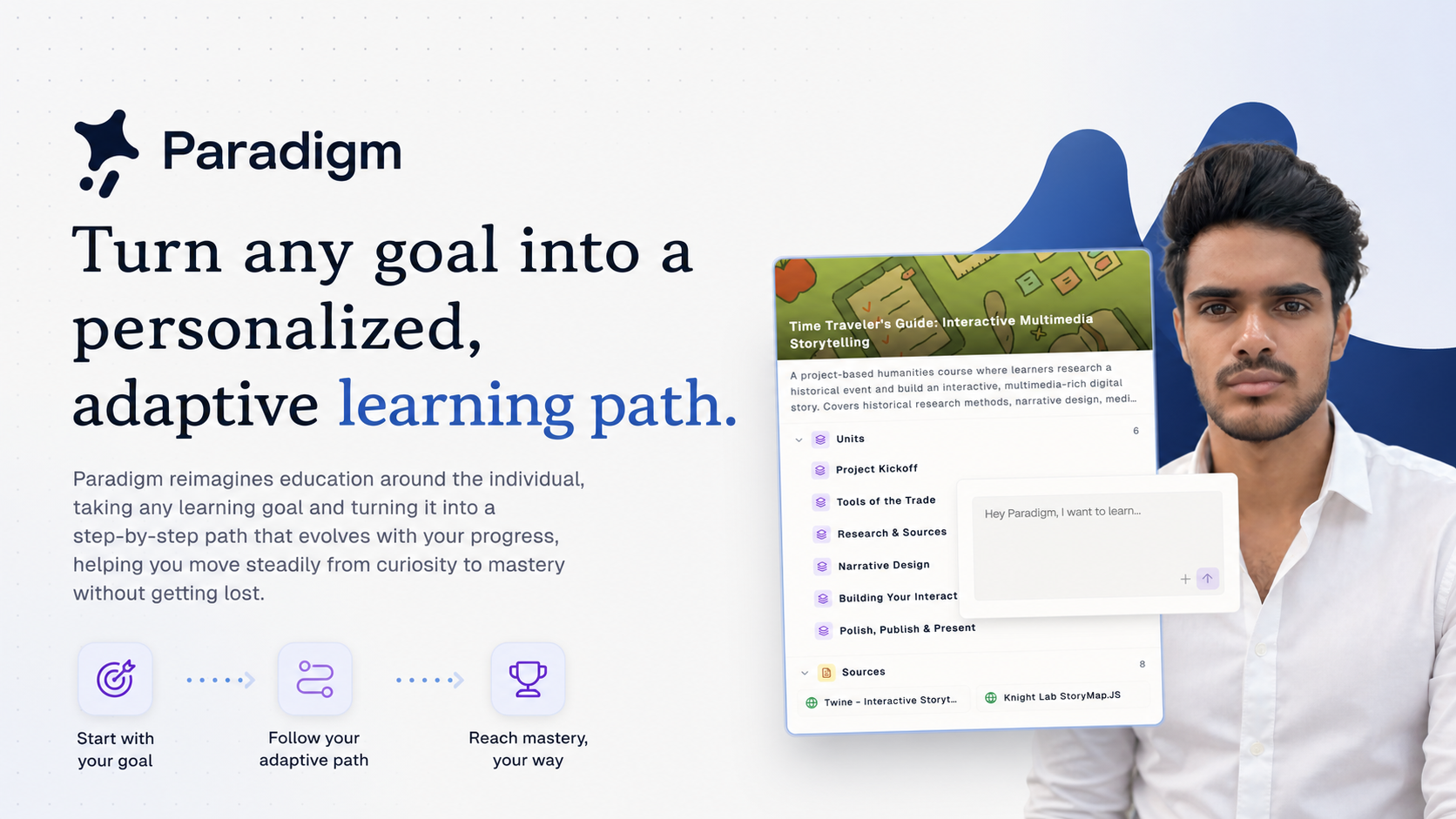
Paradigm is a platform focused on this exact problem. It is designed to take a learning goal and turn it into a personalized, adaptive learning path. Instead of treating education as a fixed course that looks the same for everyone, Paradigm centers the experience around the individual learner and the specific goal they want to reach.
The platform can be found at https://www.paradigm.study/.
What Is Paradigm?
Paradigm is a learning platform that helps structure education around a goal. Its main purpose is to convert a learner’s objective into a step-by-step path. That path is intended to evolve as the learner makes progress, helping them move from initial curiosity toward a stronger understanding of the topic.
This approach is different from simply browsing random videos, articles, tutorials, or course lists. The focus is not only on providing learning material, but on organizing the process so the learner has a clearer sense of sequence and direction.
In simple terms, Paradigm aims to answer questions such as:
- What should I learn first?
- What comes after the basics?
- How do I keep progressing without feeling lost?
- How can a learning path adjust as I improve?
These are common challenges in self-directed learning. Many people have access to more information than ever, but access alone does not always create clarity. A structured path can make the learning process easier to follow.
The Main Idea Behind the Platform
The central idea behind Paradigm is personalization. A learning goal is not always the same for every person. Two people may both want to learn about the same subject, but their backgrounds, timelines, strengths, and gaps may be different.
For example, one person learning a new professional skill may already understand the basics, while another may be starting from zero. A fixed course may not fit both learners equally well. Paradigm’s description suggests that it is designed to adapt the path based on progress, rather than keeping every learner on an identical track.
This makes the platform part of a broader shift in learning: moving away from one-size-fits-all education and toward more individual learning journeys.
How Paradigm Frames the Learning Process
Paradigm describes learning as a progression from curiosity to mastery. That framing is useful because it recognizes that people often begin with a broad interest before they fully understand what they need to know.
A person might start with a goal like learning data analysis, improving writing, understanding product management, or exploring a new academic topic. At the beginning, the goal may feel large and undefined. A step-by-step path can break it into smaller parts, making the process less overwhelming.
The platform’s approach can be understood through three broad stages:
- Goal definition: The learner begins with something they want to learn or achieve.
- Path creation: The goal is turned into a structured sequence of learning steps.
- Adaptation: The path evolves as the learner makes progress.
This kind of structure can be especially helpful for people who prefer independent learning but still need guidance.
Why Adaptive Learning Paths Matter
Traditional learning paths are usually fixed. A course has a beginning, middle, and end, and every learner follows the same order. That can work well in many cases, especially when the subject has a clear structure. However, it can also create friction when learners already know some parts, struggle with others, or need a path that matches a specific goal.
An adaptive learning path is different because it is meant to respond to the learner’s progress. If the learner advances quickly, the path can continue forward. If the learner needs more time with a concept, the path can adjust to support that progress.
Paradigm’s positioning is based on this adaptive idea. The goal is not simply to present information, but to help the learning journey stay aligned with the person using it.
Who May Find Paradigm Relevant?
Paradigm may be relevant to different types of learners, particularly those who are trying to learn outside a traditional classroom or fixed curriculum. Its goal-based structure could apply to personal interests, career development, academic exploration, or skill building.
Examples of people who may be interested in this type of platform include:
- Self-directed learners who want structure without enrolling in a traditional program.
- Professionals who are trying to build a skill for work or career growth.
- Students who want a clearer path for understanding a subject.
- Career changers who need to map out unfamiliar topics step by step.
- Curious learners who often start learning new things but lose direction along the way.
The common thread is the need for a learning path that begins with a specific goal and provides ongoing direction.
What Makes the Concept Practical
One practical challenge in learning is not a lack of content. In many subjects, there is too much content. Search results, tutorials, newsletters, videos, and online courses can quickly become difficult to sort through. This can lead to hesitation, distraction, or repeatedly starting over.
A platform like Paradigm addresses the organization side of learning. By turning a goal into a path, it helps reduce the need to decide every next step manually. That does not remove the work of learning, but it can make the process easier to navigate.
The step-by-step format also supports momentum. When the next step is visible, learners may spend less time figuring out what to do and more time engaging with the topic itself.
Learning Without Getting Lost
One of the strongest ideas in Paradigm’s description is helping people avoid getting lost. This is a familiar issue for anyone who has tried to learn independently. It is easy to begin with one topic, click into another, then end up with a long list of resources but no clear progress.
A guided path can create a more stable learning experience. It gives the learner a reference point: where they are, what they have covered, and what comes next. When that path also adapts, it can better reflect the learner’s actual progress rather than forcing them through a rigid structure.
Personal and Professional Uses
Paradigm’s goal-based model can apply to both personal and professional learning. On the personal side, someone might use it to explore a new topic, understand a subject they have always been curious about, or develop a creative skill. On the professional side, the same structure could support learning related to work, such as improving communication, understanding a technical field, or preparing for a new role.
The key point is that the platform starts from the learner’s goal. This makes it flexible in concept, because the path is shaped around what the person wants to learn rather than a predefined course title alone.
What to Keep in Mind
Paradigm is presented as a platform for personalized, adaptive learning paths. As with any learning tool, the value of the experience depends on the learner’s goal, consistency, and engagement with the path provided.
It is also useful to understand that a learning path is a guide, not a substitute for effort. Progress still requires reading, practice, reflection, and time. The platform’s role is to help organize and adapt the journey so that the learner has a clearer route to follow.
Final Overview
Paradigm focuses on a common problem in modern learning: people know what they want to learn, but they do not always know how to get there. By turning goals into personalized, adaptive learning paths, it aims to make the learning process more structured and easier to follow.
The platform is built around the idea that education should be shaped around the individual. For learners who want more direction than open-ended browsing, but more flexibility than a fixed course, Paradigm presents an approach centered on steady progress and goal-based learning.
More information about the platform is available at https://www.paradigm.study/.