Pazi: An AI Team for Turning Unfinished Ideas Into Practical Next Steps
Most people have at least one idea that keeps returning to them. It might be a book they want to write, a small online shop they have imagined for years, an app concept, a course, a consulting offer, or a skill they could turn into a service. The difficult part is often not the idea itself, but everything that comes after it.
What should be done first? Should there be a website? Is outreach needed? What content should be created? How should the idea be explained clearly? These are practical business operations questions, and they can slow down projects before they ever become visible.
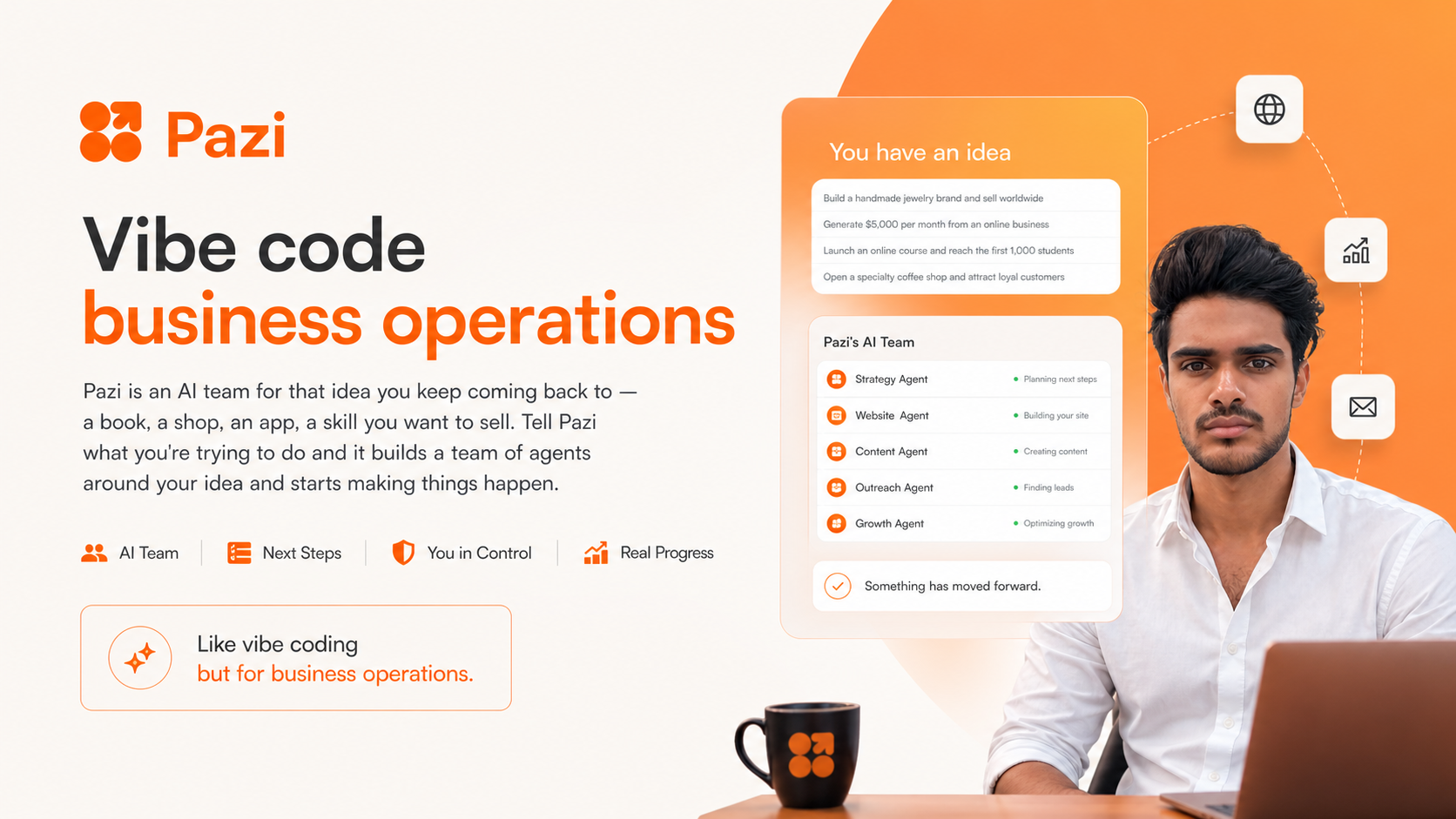
Pazi is a platform that approaches this problem by giving users an AI team built around their idea. Its tagline is “Vibe code business operations”, which points to the way it applies the loose, conversational style of AI-assisted building to the operational side of getting a project moving.
The platform can be found at https://pazi.ai/.
What Is Pazi?
Pazi is an AI-based platform designed to help people make progress on ideas they keep coming back to. Instead of focusing only on writing text, answering questions, or generating isolated assets, Pazi is described as creating a team of agents around an idea.
The user explains what they are trying to do, and Pazi starts helping with practical next steps. These steps may include things like building a website, starting outreach, creating content, or identifying what should happen next.
The central idea is that the user remains in control while the AI team works alongside them. Rather than presenting the experience as a one-time tool, Pazi is positioned around ongoing progress. When the user comes back, something should have moved forward.
The Problem Pazi Is Trying to Address
Many ideas fail to move forward because they require a mix of small but important operational tasks. A person may know what they want to create, but still need help with planning, writing, organizing, publishing, presenting, and reaching people.
For example, someone with an idea for a small business might need to:
- Clarify what the idea actually offers
- Create a simple website or landing page
- Write basic copy that explains the offer
- Prepare outreach messages
- Create early content for visibility
- Decide which step should come next
- Keep momentum without getting stuck in planning
These tasks are not always difficult individually, but together they can become overwhelming. Pazi is built around helping with this operational layer, especially for ideas that are still early or not yet fully structured.
How the Platform Works Conceptually
The basic flow of Pazi is simple to understand. A user starts by telling the platform what they are trying to do. This could be a creative project, a business idea, a digital product, a service, or a skill they want to offer.
From there, Pazi builds a team of AI agents around the idea. These agents are intended to help with different parts of moving the project forward. Instead of treating the idea as a single prompt, the platform appears to treat it as an ongoing initiative with multiple workstreams.
The kinds of outputs mentioned for Pazi include:
- A website: Helping turn an idea into something that can be shared publicly.
- First outreach: Creating or supporting early communication with potential customers, readers, users, or collaborators.
- Content: Producing material that explains the idea or helps it reach people.
- The next step: Identifying what should happen after the current stage.
This structure is important because many AI tools are used for one-off tasks. Pazi is framed more like a working environment where the project continues over time.
What “Vibe Code Business Operations” Means
The phrase “vibe coding” is often used to describe a style of building software with AI where a person explains what they want in natural language and the system helps produce the code or product. The person guides the direction while the AI assists with execution.
Pazi applies a similar idea outside of pure software development. Instead of only helping write code, it focuses on business operations. That means the work around an idea: pages, messages, content, structure, planning, and practical movement.
In this context, “vibe code business operations” means that a person can describe what they are trying to create in plain language, and Pazi helps convert that intention into operational progress.
Types of Ideas Pazi Is Built Around
Pazi is not limited to one specific type of project in its description. It is presented as a platform for “that idea you keep coming back to.” That makes it relevant to a range of personal and professional projects.
Examples include:
- A book: Helping shape the project, create related content, or build a presence around it.
- A shop: Supporting early setup, product presentation, or outreach.
- An app: Helping communicate the concept, build public-facing materials, or organize next steps.
- A skill to sell: Turning a personal skill into a service, offer, or online presence.
- A small business idea: Creating the early operational pieces needed to test or present it.
The common thread is that the project needs more than just an idea. It needs action, structure, and follow-through.
Staying in Control While AI Helps
One notable part of Pazi’s description is the emphasis on the user staying in control. The platform is not presented as something that takes an idea away from the person and independently decides everything. Instead, the AI team works alongside the user.
This matters because personal and professional projects often involve judgment, taste, timing, and context. AI can help generate assets and suggest actions, but the person behind the idea still needs to decide what feels accurate, appropriate, and aligned with their goals.
Pazi’s positioning suggests a collaborative model: the user provides the direction, and the platform helps with execution and movement.
Why Ongoing Progress Matters
A common issue with early-stage projects is that they stop between sessions. A person may brainstorm one day, write notes another day, and then leave the idea untouched for weeks. The next time they return, they have to rebuild context and motivation.
Pazi’s description focuses on the idea that “every time you come back, something has moved.” This points to a workflow where progress does not depend entirely on the user starting from zero each time.
For people managing projects around work, learning, creativity, or entrepreneurship, this kind of continuity can be significant. It changes the experience from occasional brainstorming to steady development.
Where Pazi Fits Among AI Tools
AI tools are often grouped by what they create: text, images, code, presentations, emails, or summaries. Pazi fits into a slightly different category because it is framed around a project and the operational work needed to move it forward.
It is less about asking one question and more about creating a small AI-supported operating layer around an idea. That makes it closer to an assistant team than a single-purpose generator.
This distinction is useful when understanding the platform. Pazi is not only about producing content; it is about helping coordinate practical steps around an idea.
Things to Keep in Mind
As with any AI platform, the usefulness of the output will likely depend on how clearly the user explains the project, reviews the work, and guides the next steps. AI-generated websites, outreach, and content still need human review, especially when they represent a real person, business, or offer.
It is also important to treat AI assistance as part of the process rather than a replacement for decision-making. The user still needs to check accuracy, adjust tone, approve messaging, and decide what should actually be published or sent.
Final Thoughts
Pazi is an AI platform focused on helping people move ideas into practical action. By building a team of agents around a project, it aims to support the operational side of getting something started, whether that is a website, outreach, content, or the next visible step.
Its core concept is straightforward: describe what you are trying to do, keep control of the direction, and let an AI team help move the project forward one step at a time.
For anyone trying to understand where AI tools are heading, Pazi is an example of a broader shift from simple prompt-based generation toward more ongoing, project-based assistance. More details are available on the official website: https://pazi.ai/.