Outcome: A Practical Look at Personalized Funnels for Creators
Many creators, consultants, coaches, educators, and online businesses use lead magnets to connect with new people. A visitor shares their email address, and in return they receive something useful, such as a checklist, PDF guide, template, mini-course, or quiz result.
That approach can still work, but it often treats everyone the same. A person who is just starting out may receive the same resource as someone who already has experience. Someone with a very specific challenge may be placed into a broad quiz category that only partly fits their situation.
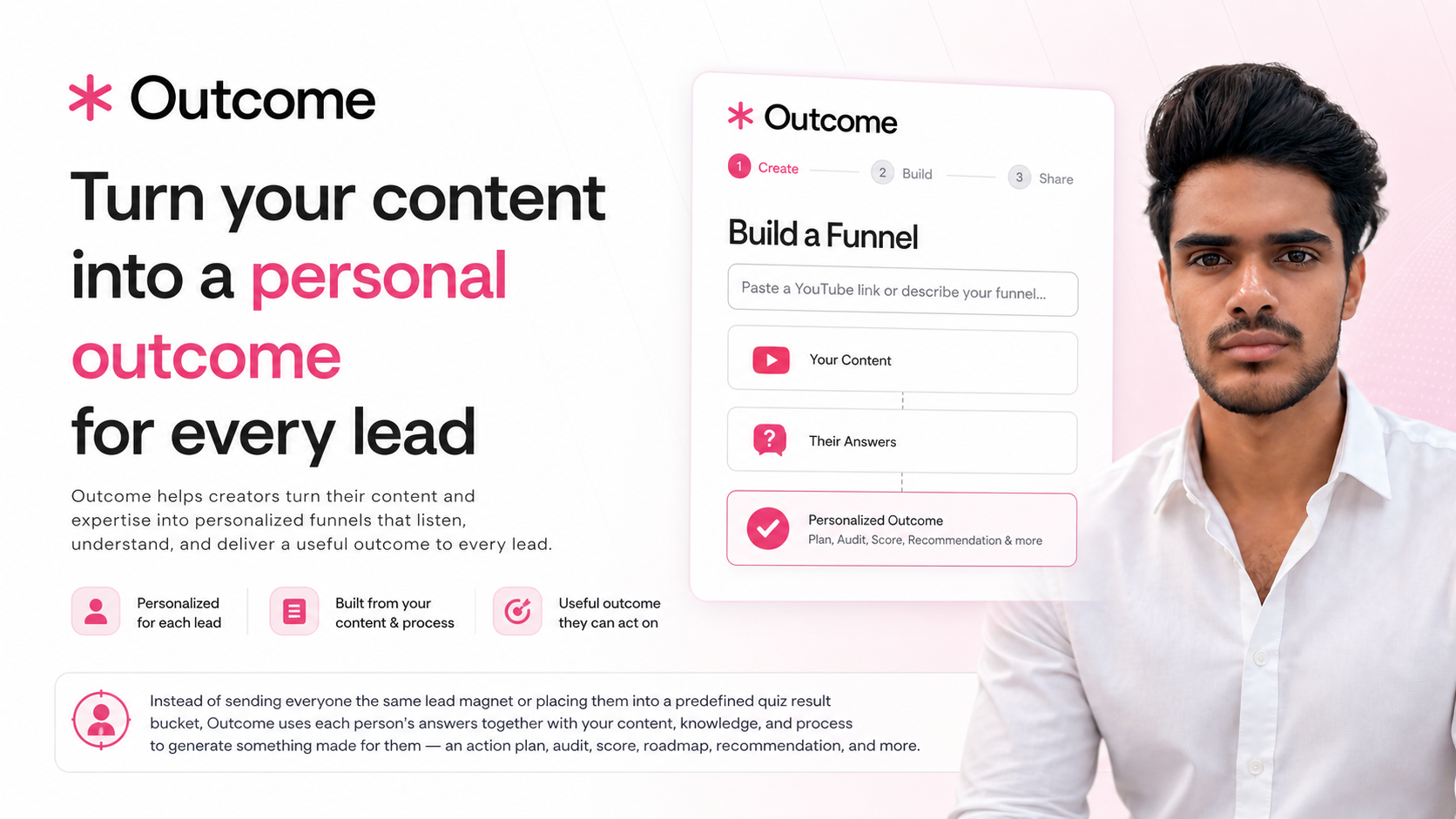
Outcome is a platform built around a different idea: turning content and expertise into a personalized outcome for every lead. The platform helps creators build what it calls an Outcome Funnel, where each person answers questions and receives something shaped around their responses, the creator’s knowledge, and the creator’s process.
The website is available at https://www.outcomeapp.ai/.
What Is Outcome?
Outcome is a platform for creating personalized funnels. Instead of sending every lead to the same static lead magnet, it helps creators collect information from each person and generate a more tailored result.
That result could be different depending on the creator’s business, audience, or subject area. For example, it may take the form of:
- An action plan
- A personal audit
- A score or assessment
- A roadmap
- A recommendation
- A diagnosis of where someone currently stands
- A next-step summary based on their answers
The main idea is simple: a lead gives input, and the funnel returns an output that feels more useful than a generic download.
How Outcome Differs From a Traditional Lead Magnet
A traditional lead magnet is usually prepared in advance. It may be valuable, but it is often the same for every person. This can be efficient for the creator, but it does not always reflect the visitor’s specific situation.
For example, a business coach might offer a PDF called 10 Ways to Improve Your Sales Process. Everyone who signs up receives the same document. Some readers may find it helpful, while others may need something more specific, such as a quick audit of their current sales bottleneck or a recommended first step based on their answers.
Outcome is designed to make the lead magnet more interactive and personal. Instead of only delivering pre-written content, the funnel can use the person’s responses together with the creator’s existing content, expertise, and process to create a custom output.
This changes the lead magnet from a one-size-fits-all resource into something closer to a guided experience.
How Outcome Differs From a Standard Quiz Funnel
Quiz funnels are already a popular way to personalize lead generation. A quiz asks a series of questions, then assigns the person to a result category. For example, someone might be labeled as a beginner, intermediate, or advanced user.
That can be useful, but many quiz funnels still rely on predefined result buckets. A person’s answers are used to place them into one of several prepared outcomes. This is better than giving everyone the same download, but it can still feel limited when someone’s situation does not fit neatly into a category.
Outcome takes a more flexible approach. The platform is described as using each person’s answers along with the creator’s content and process to deliver a result made for that individual. This means the outcome can be more specific than a simple category label.
Who Might Use Outcome?
Outcome is especially relevant for people who already have knowledge, content, or a repeatable process that can be turned into a personalized experience. This may include creators and professionals such as:
- Coaches who want to give prospects a tailored action plan
- Consultants who want to provide a short audit before a sales conversation
- Course creators who want to guide visitors toward the right learning path
- Educators who want to help people understand their current level
- Content creators who want to turn articles, frameworks, or guides into interactive funnels
- Service providers who want to qualify leads while also giving them something useful
The common thread is that the creator has expertise and wants to use it to provide a more relevant first interaction.
Examples of Outcomes That Could Be Created
The word outcome is broad, which is part of the concept. A funnel does not have to end with a simple PDF or a generic score. It can be built around the type of result that makes sense for the audience.
Some possible examples include:
- A business growth roadmap: A founder answers questions about their current challenges, and the funnel provides a suggested next-step plan.
- A content strategy audit: A creator shares details about their niche, posting habits, and goals, then receives a short assessment.
- A learning path recommendation: A student answers questions about their skill level and objective, then receives a suggested starting point.
- A fitness or wellness plan outline: A visitor provides basic goals and constraints, and the funnel returns a general plan structure.
- A marketing readiness score: A business owner answers questions about messaging, offer, audience, and traffic, then receives a score with notes.
These examples show how a creator’s knowledge can be turned into a personalized lead experience. The exact structure would depend on the creator’s topic, process, and audience.
Why Personalization Matters in Lead Generation
People often search for help because they are dealing with a specific problem. When the response they receive is too broad, they may not know how to apply it to their own situation.
A personalized funnel can make the first interaction more useful by reflecting what the person actually shared. It can also help the creator understand the lead better. The answers collected in the funnel may reveal the person’s goals, level of experience, pain points, or readiness to take the next step.
This can create a more informed starting point for future communication. Instead of only knowing that someone downloaded a guide, the creator may understand what the person is trying to solve and what kind of help may be relevant.
The Role of a Creator’s Existing Content
One of the useful parts of Outcome’s concept is that it is built around the creator’s own content and expertise. Many creators already have valuable material spread across blog posts, videos, frameworks, guides, courses, templates, or client processes.
Outcome is positioned as a way to turn that knowledge into an interactive funnel. Rather than asking creators to start from nothing, the platform focuses on using what they already know and packaging it into a more personalized experience.
This may be helpful for creators who have a clear process but want a better way to deliver it to new leads in a more tailored format.
What to Keep in Mind
Like any platform, Outcome should be understood for what it is designed to do. It is not just a simple email capture form, and it is not only a traditional quiz builder. Its main purpose is to help creators provide a customized output based on a person’s answers and the creator’s knowledge.
Before using a platform like this, it is helpful to think through a few questions:
- What problem does the audience want help with?
- What information needs to be collected to understand that problem?
- What type of outcome would be genuinely useful?
- What existing content or process can support the result?
- How should the personalized outcome connect to the next step?
The quality of the funnel will depend heavily on the clarity of the creator’s process. A personalized result is most useful when it is based on thoughtful questions and a well-defined framework.
Final Thoughts
Outcome is a platform focused on making lead generation more personal and useful. Instead of giving every visitor the same lead magnet or placing them into a fixed quiz result, it helps creators deliver an outcome that reflects the person’s answers.
For creators with existing content, knowledge, or a repeatable process, this type of funnel can turn expertise into an interactive experience. The result may be an audit, roadmap, score, recommendation, action plan, or another format that helps the lead understand their situation more clearly.
As online audiences become more selective about what they sign up for, tools that create more relevant first interactions are worth understanding. Outcome fits into that space by helping creators move from static content toward personalized outcomes.